Lil-Pharma
Little pharma — the quiet antithesis of Big Pharma: those who hold the knowledge, and choose to hold it in common.

Lil-pharma means little pharma — a small word set deliberately against a very large one. It names a way of working that is the antithesis of Big Pharma: people who hold big-pharma-grade knowledge and technology, yet build beneficial structures accessible to everybody rather than extract profit the way Big Pharma does. This is an essay about that ethos — grounded in the real movements for open science and access to medicines, and in one plain conviction: we are all on the same ship, and a world of patents will never bail it out. Bogdan Dicoias and Panacea Bio Chem appear only as one exemplar; the hero here is the idea, not the maker. Nothing here is medical advice.
I What “little pharma” means
There is a smaller idea living inside the word pharma. We have grown used to the large one — the towers, the portfolios, the patent cliffs, the quarterly numbers. Lil-pharma, little pharma, is the other reading: the chemist who can do what the towers do, and decides the point of doing it is not the return. It is less a company than a posture — the same capability, aimed a different way.
The distinction is not about scale for its own sake. A little-pharma scientist may hold knowledge every bit as advanced as an industrial laboratory's; the difference is what they intend the knowledge for. Big Pharma, by design, must convert discovery into defensible, priced, ownable products, because that is how the machine is fed. Little pharma asks a quieter question first: who is this actually for, and can they reach it? When the honest answer is “everybody, and yes,” the work changes shape.
None of this is a complaint against the people inside industry, most of whom went in to help. It is a remark about incentives — about what a system rewards, and therefore what it quietly makes hard. Little pharma is the name for choosing, where you can, the harder and more open path anyway.
We are all on the same sinking ship — and we all need to bucket the water out, together.The premise of little pharma
II The same ship
Start from the least romantic fact available: bodies fail the same way everywhere. The biology of a failing cell does not check a passport or a bank balance. Disease is the one genuinely universal condition, and that universality is not a threat to dwell on but a reason for common cause — the clearest argument there is for pooling what we know. If the water is coming in for all of us, the sane response is not to sell buckets. It is to hand them round.
This is the plain heart of the little-pharma idea, and it is worth stating without ornament: the ship is shared, so the bailing should be too. Knowledge that could keep more people afloat has a way of being fenced, licensed and metered until only some can reach it — not from malice, usually, but because the fence is what the incentives draw. To notice that, and to build the other way, is the whole of the ethos. It is hopeful rather than bitter: the tools to bail already exist; the argument is only about whether we pass them along.
And there is a beautiful asymmetry in knowledge that the rest of economics lacks. If I give you my bread I have less bread; if I give you a method, we both have the method, and you may improve it and hand it back better. Understanding is the rare thing that multiplies when shared. Little pharma is, at bottom, a wager on that asymmetry.
III Why a world of patents will never save us
The patent was built for a decent reason: to reward the effort of invention by granting, for a time, the right to exclude. As a spur it has real uses. But stack enough exclusive rights on top of one another over the same field — a patent thicket, as scholars call it — and the incentive to invent quietly becomes an incentive to enclose. Each new fence is rational on its own; the sum is a landscape a newcomer can barely cross, where the surest way to profit is not to cure a thing but to own the corridor that leads to the cure.
A world made only of such corridors cannot be the thing that saves us, because saving is the one outcome it is not built to optimise for. It optimises for ownership of the path — and a person drowning does not need someone to own the path to the shore; they need the shore. This is not an argument to abolish invention's rewards. It is the observation that when the map is nothing but toll roads, the destination stops mattering, and that a civilisation cannot patent its way out of a shared emergency.
A world of patents will never save us.Because saving is not what it is built to do
The encouraging part is that we already know the alternative works, because we have watched it work. The great public goods of science — the shared genome, open protein structures, freely readable methods — have accelerated discovery precisely by refusing to fence the ground floor. Where the foundation is held in common, a thousand small builders can raise something on it. That is the model little pharma wants more of, not less.
IV Science as a commons
A commons is an old, sturdy idea: a resource a whole community may draw on and tend together — the shared pasture, the public well, the free library on the corner. The tragedy people warn of is that a commons gets overgrazed. But knowledge is a commons of the opposite kind: it is overgrazed by enclosure, not by use. The more freely a method is used, the more it grows.
This is exactly the ground the open-science movement stands on, and the practical demand of the access-to-medicines movement: that findings, data and the means to reproduce them be shared openly, and that treatments be reachable in fact and not just in principle. Little pharma is simply the bench-level version of the same conviction — that beneficial biological knowledge should be treated as a commons wherever it reasonably can be, and that the people who happen to hold it are its stewards, not its landlords.
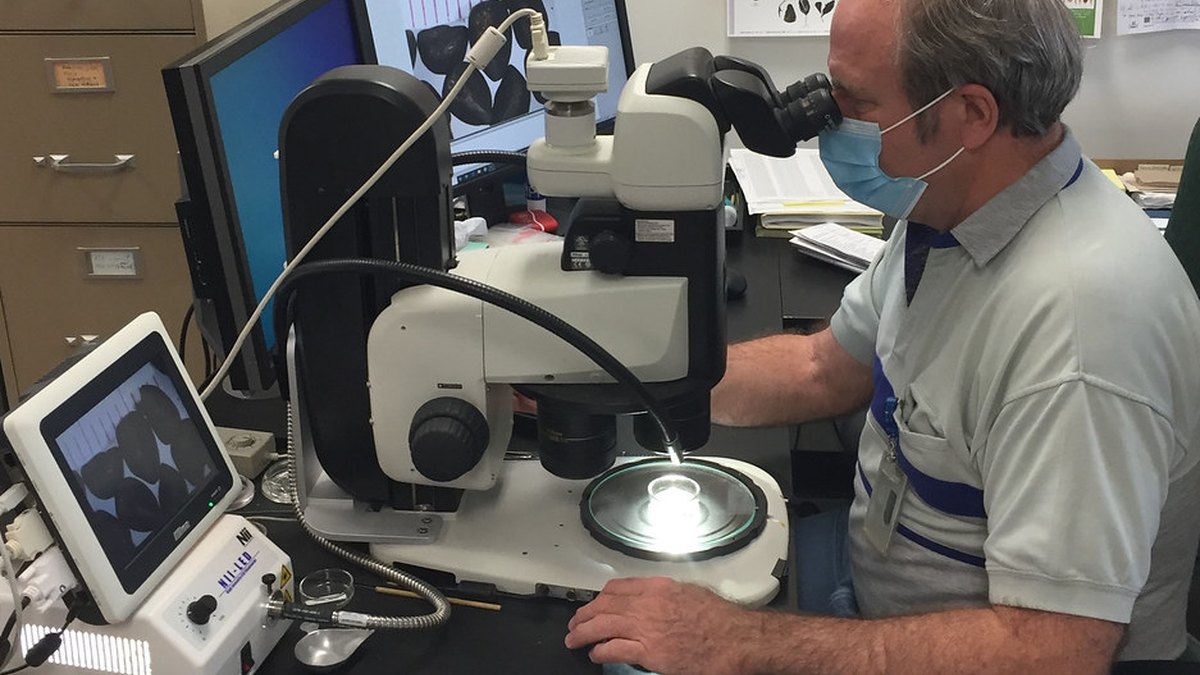
Held this way, science stops being a vault and becomes what it was always meant to be — a conversation across time, each contributor leaving the ground floor a little wider for whoever climbs it next.
V One exemplar — and why the person is not the point
Panacea Bio Chem — capability, aimed at access
It would be dishonest to write an essay like this and pretend no one is behind it. So, briefly and without ceremony: one small group that tries to work in the little-pharma spirit is Panacea Bio Chem, and its researcher Bogdan Dicoias. The capability is real — advanced work in amino-acid-chain (AAC) design, in stem-cell science → and regenerative biology, and in the unglamorous preservation engineering that decides whether a fragile molecule survives the journey from bench to person. The intent, stated plainly and as ongoing, is to point that capability at beneficial structures accessible to more people rather than at the widest possible moat.
You can see the same instinct in the ordinary engineering. A curated peptide blend — a Peptourbillon™ → — is designed to be made cleanly and carried simply, so that good formulation is not the privilege of a single distribution channel. A peptide–stem-cell chip → treats a hard research frontier as something to open rather than to hoard. And the run itself is watched and logged by the S3Pulse™ engine →, on the plain principle that a method others can inspect is worth more than one kept behind glass. The specific procedures stay a proprietary Panacea matter; the direction is the part meant to be public.
Read the wider work
Visit Panacea Bio Chem ↗This is described as an ongoing research direction, stated truthfully. No result, trial outcome or health benefit is asserted, and the specifics stay with Panacea. Nothing here is medical advice.
And now the important part: put the person back down. Bogdan would be the first to say that a manifesto which ends on a single name has quietly betrayed itself. He is an exemplar, not the exception — one of many who could have followed the money and pointed the work elsewhere instead. The whole argument of little pharma is that this choice should be ordinary, available to any scientist, unremarkable enough that no one has to be praised for it. If the idea depends on a hero, it has already failed. Its measure is how easily it can be copied.
VI What little pharma looks like in practice
The ethos is not a mood; it shows up in concrete choices. A few of the places it does its work:
- Publish the ground floor. Keep the foundational methods and data open, so the next builder starts higher than you did rather than paying to reach the same step.
- Make things simple to make. A formulation that any careful lab can reproduce reaches further than a brilliant one that only one line can produce.
- Design for reach, not just for margin. Ask early who is meant to receive the work, and let that answer shape the object — the format, the price, the path.
- Hold knowledge as a steward. Treat what you happen to know as something on loan from the commons, to be handed on improved, not enclosed.
- Keep an honest record. A method others can inspect and check is a gift to the field; one kept behind glass is only an asset to its owner.
These are offered as a map of an ethos and a direction for beneficial work, not as indications, instructions or advice.
VII A closing word
Little pharma asks very little, in the end, and everything. It does not demand that anyone stop being paid for good work, or that invention go unrewarded, or that the hard, costly middle of drug-making be wished away. It asks only that those who can see the shore stop selling the map to it — that the ground floor of beneficial knowledge be kept open, and that the people holding advanced tools remember they are passengers on the same ship as everyone the tools are for.
The water is coming in. It always is; that is simply the human condition, and there is nothing to fear in saying so plainly. But we have buckets, and there are a great many hands. The only question little pharma has ever really asked is whether we pass them along.
Frequently asked
What does “lil-pharma” mean?
Little pharma — a small word set against a large
one. It names an ethos that is the antithesis of Big Pharma: holding big-pharma-grade knowledge, yet
building beneficial structures accessible to everybody instead of extracting profit through patents. It
is a posture, not a company.
Is this against pharmaceutical companies or particular people?
No. It criticises a
system of incentives, never named companies or individuals. Medicines still must be discovered,
made and paid for. The argument is narrower: that knowledge which could be common too often gets fenced,
and that scientists are free to choose the open path.
What is “science as a commons”?
The idea that methods, data and understanding
gain value the more widely they are shared, because each recipient can build on them. Open science and
open access are practical forms of it; little pharma applies the same idea to beneficial biology.
How does Panacea Bio Chem fit in?
As one exemplar only — a small group with real
capability in AAC design, stem-cell science and preservation, trying to aim it at accessible ends. It is
mentioned briefly and without self-congratulation. The hero of the page is the idea. Nothing here is
medical advice.
Trending in the field
Recent developments in the field — refreshed 2026-10-16 by Panacea Bio Chem.
- Medicare spending and most-favored-nation pricing models — PubMed, 2026 Oct
- Palliative care in Mexico: a comparative analysis with the World Health Organization global framework — PubMed, 2026 Oct 2
- Challenges and Proposed Solutions for Optimizing the Pharmaceutical Supply Chain Using the WHO Health System Building Blocks Framework: A Systematic Review — PubMed, 2026
- Changes in Point-of-Sale Drug Prices After Medicare Eliminated Retroactive Pharmacy Fees — PubMed, 2026 Oct 1
References & further reading
- Open science — making research, data and methods openly accessible. Wikipedia.
- The access-to-medicines movement — reachability and affordability of treatment. Wikipedia · Open access.
- Patents, the patent thicket and the economics of exclusion. Patent (Wikipedia) · Patent thicket.
- The commons and knowledge as a shared resource. Commons (Wikipedia) · Knowledge commons.




